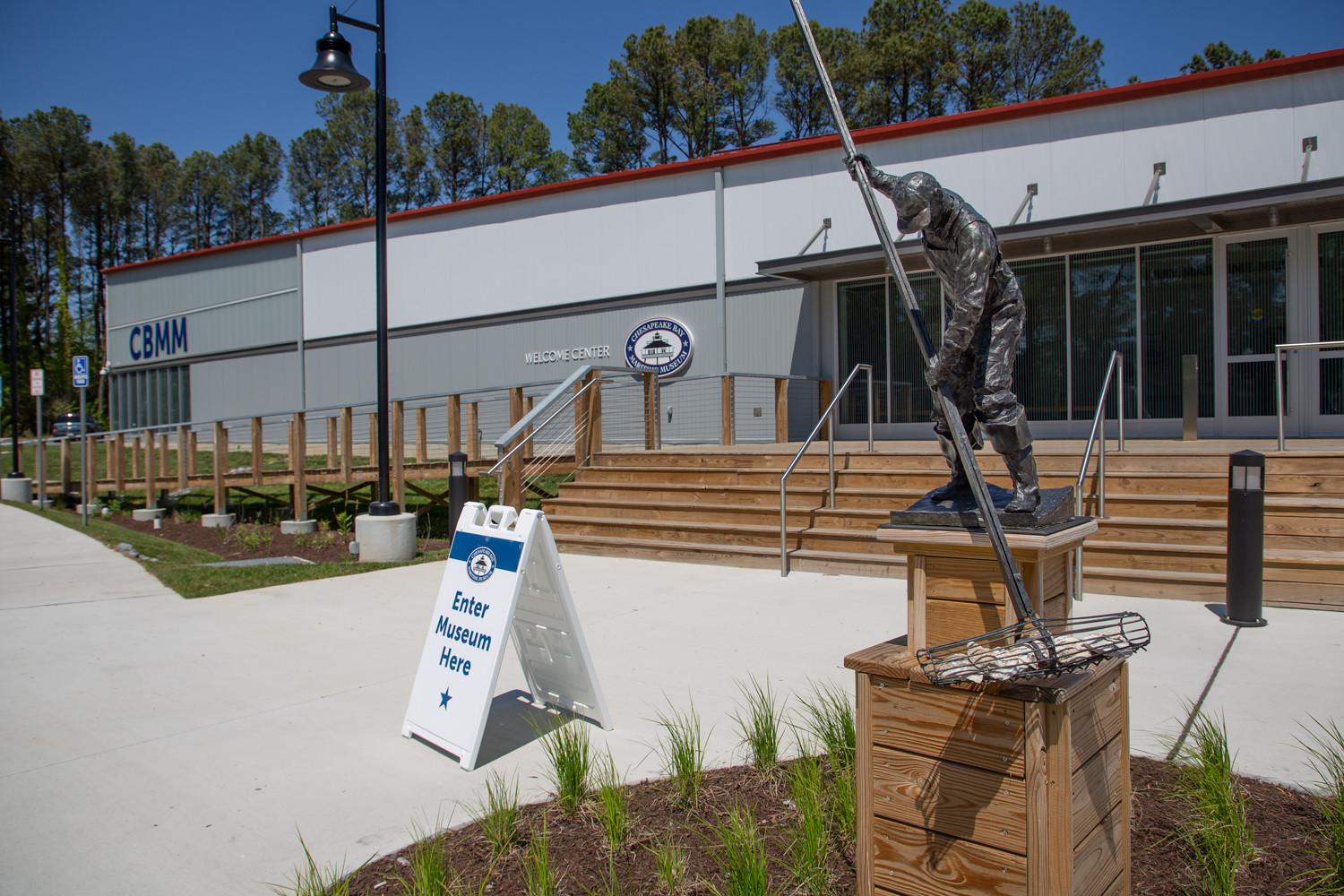
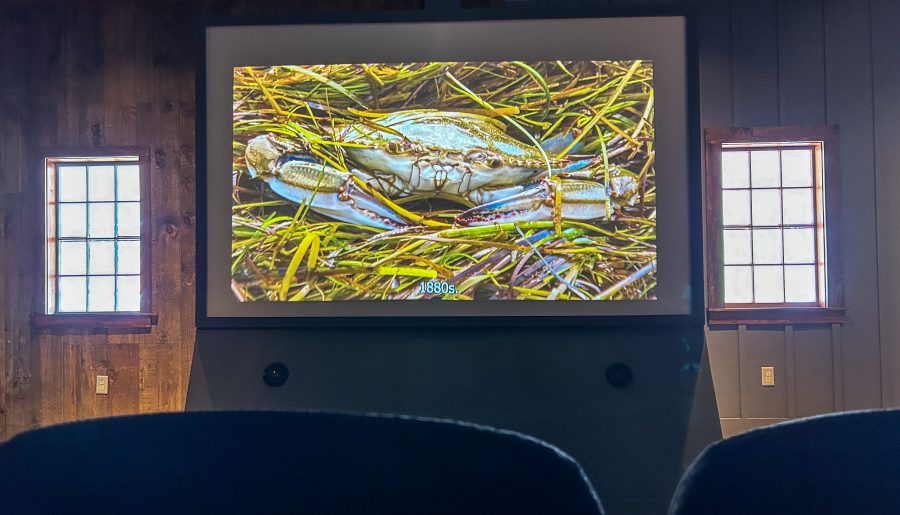
Debuted in October 2025, the CBMM Theater celebrates the power of storytelling by sharing selections from its library of historic and documentary films throughout the year.
This new space, located in the former Waterfowling building on Navy Point, will highlight on-demand short films and longer features that share mission-related stories, including the 2022 Emmy-winning documentary “The Long Shore” that takes viewers on a journey through the history of the Chesapeake Bay through the eyes of CBMM’s Curatorial team and the shipwrights of its working Shipyard.
CBMM also plans to showcase a variety of films featured through the years during Maryland Public Television’s Chesapeake Bay Week, many of which spotlight CBMM’s campus, collections, and staff expertise. The theater will regularly showcase the works of the celebrated Bay environmental filmmaking team of Dave Harp, Tom Horton, and Sandy Cannon-Brown, as well.
The CBMM Theater can also be utilized for events and meetings.
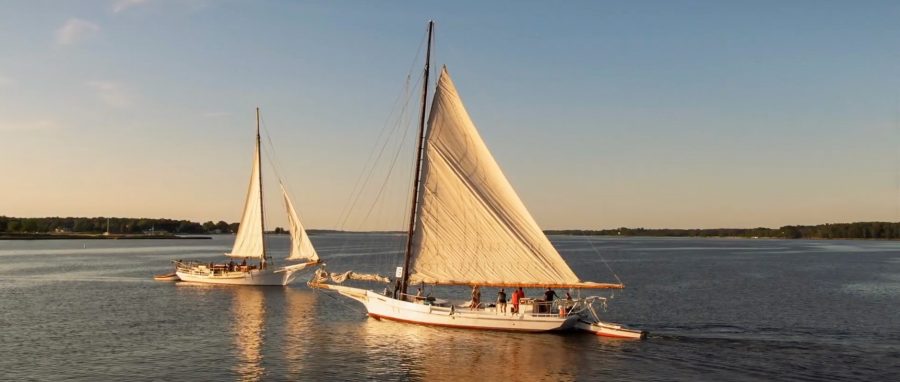
The CBMM Theater showcases mission-related stories through short films and longer features throughout the year.
A documentary highlighting CBMM’s campus and mission, “The Long Shore” is among the film’s regularly featured in the CBMM Theater.
This special exhibition is set to open on the second floor of the Chesapeake Bay Maritime Museum’s Changing Exhibitions Gallery on Friday, Feb. 27, 2026.
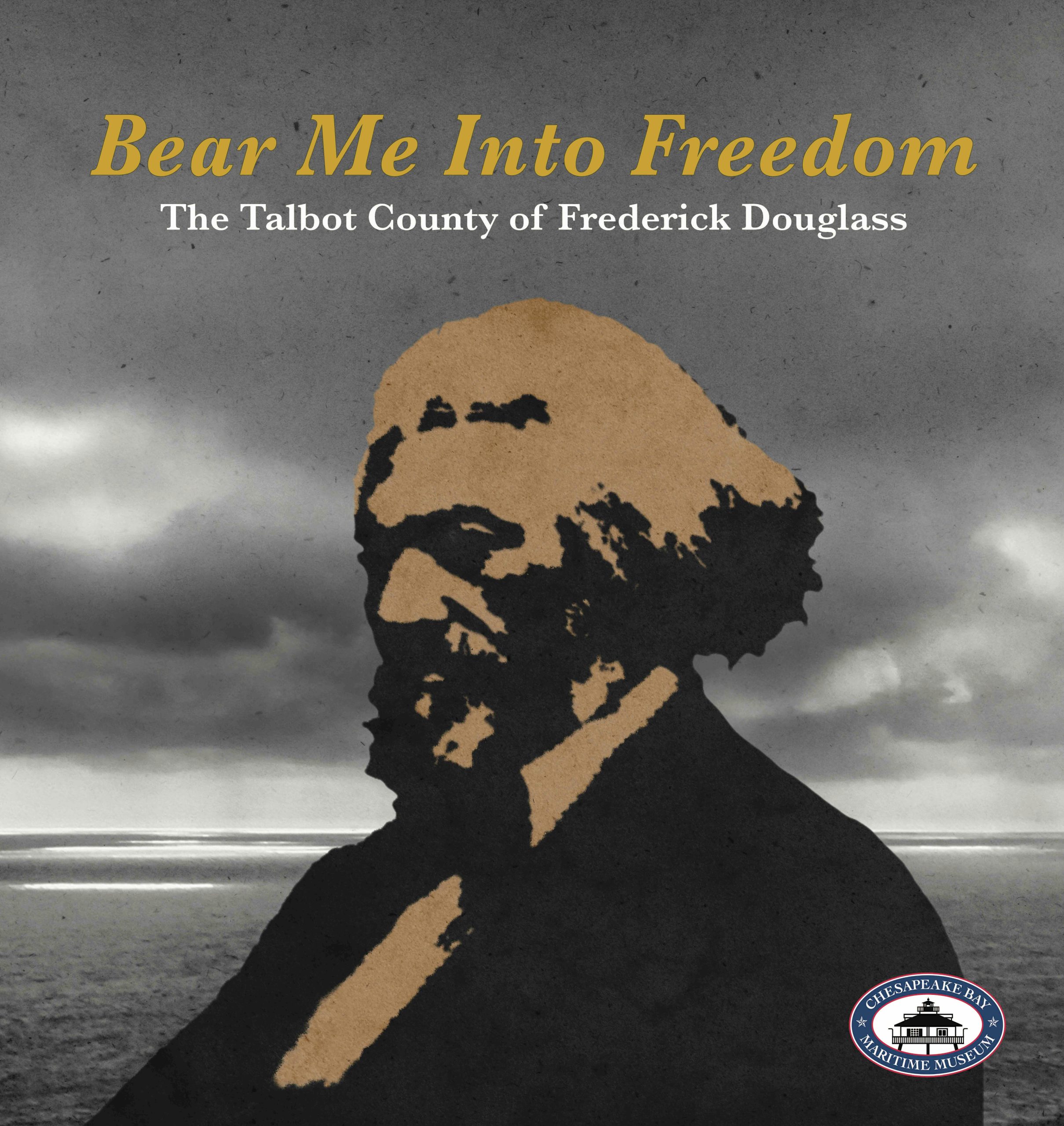
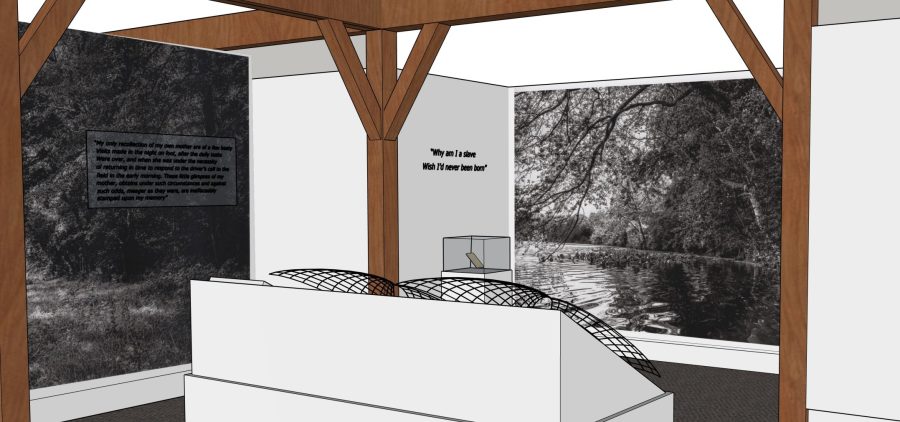
Bear Me Into Freedom: The Talbot County of Frederick Douglass explores how Frederick Douglass’ early life in Talbot County, Maryland, shaped his journey to become a prominent abolitionist, writer, and orator. The exhibition is organized around a series of waypoints that guide visitors through key moments and locations from his life, from birth to his later returns as a free man, and how the landscape shaped these experiences.
A large, central historic map of Talbot County will serve as an introduction and a visual guide, outlining the places, routes, and timeline of Douglass’ life in the area. A graphic timeline will connect these waypoints and fill in events beyond his Maryland experiences.
Waypoints and Experiential Highlights
Tuckahoe Creek (1818): This section focuses on Douglass’ early childhood. Experiential objects include a haul seine net and a net-making activity to represent his grandmother’s work and the landscape of Tuckahoe Creek.
Wye House (1824): Visitors will learn about Douglass’ time at the Lloyd Plantation. The juxtaposition of the estate with his harsh living conditions is highlighted through objects like an eating tray/trough and door to the closet where he slept to show his limited rations and shelter.
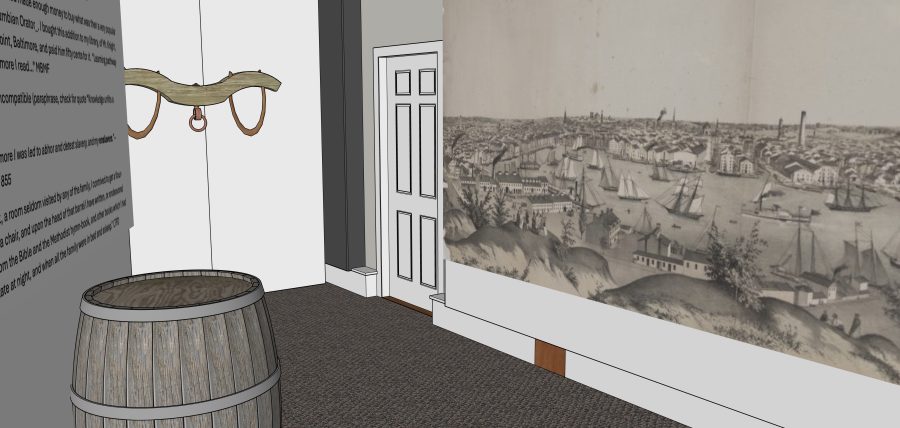
Fells Point & Holme Hill (1826-1827): This waypoint explores Douglass’ “passage” to and from Baltimore, emphasizing his transition from an enslaved boy to a person gaining literacy which led him “to abhor and detest slavery, and my enslavers.” Visitors can see and interact with books and his flour barrel desk to represent his efforts to learn to read and write.
St. Michaels & Wades Point Farm (1833-1834): This section covers his time in the “drab oyster town” of St. Michaels and his brutal year with Edward Covey. An ox yoke will represent his labor and the attempt to “break” him, and his determination to shed the “yoke of tyranny,” a turning point for his self-determination and sense of power.
Freeland Farm (1835-1836): This waypoint centers on his escape attempt and his time teaching others and practicing oratory in a Sabbath school under oak trees. The exhibit will highlight the 20-mile walk to Easton jail after his arrest for plotting an escape by log canoe.
Fells Point (1836-1838): This section marks his return to Baltimore and his final escape disguised as a free sailor. A caulking interactive lets visitors experience this part of Douglass’s life firsthand. This occupation provided him with valuable skills, access to information, and a pathway to freedom disguised as a free sailor.
Return to Talbot County (1877-1893): The final waypoints cover Douglass’ returns to his birthplace as a celebrated figure. Guests will be able to stand at a pulpit reminiscent of the one at Asbury UMC to read Douglass’ words. A writing station will also give visitors an opportunity to write a letter to Douglass, putting themselves in the mindset of someone from his time.
A key highlight of the exhibit is the central Frederick Douglass interactive. Using a tablet, guests will be able to ask questions and receive a curated response in an authentic voice from a “hologram” of Frederick Douglass, a closed-loop AI (artificial intelligence) interactive displayed on a large screen and built on inputs from the rich primary and secondary source material by and about Douglass.
The exhibit will draw from the black-and-white photography from Jeff McGuiness’ book, “Bear Me Into Freedom,” as well as historical documents and images, and hands-on activities to create an immersive and educational experience that contextualizes Douglass’ life story and allows visitors to follow his journey from enslavement to freedom and an indelible legacy. Viewing is included with CBMM general admission, which is always free for CBMM members.
Bear Me Into Freedom: The Talbot County of Frederick Douglass opens on Feb. 27.
A rendering of CBMM’s forthcoming exhibition Bear Me Into Freedom: The Talbot County of Frederick Douglass.
Aaron Anthony, Douglass’ enslaver, was overseer for the Lloyd family who lived at Wye House on the Wye River. (Photograph by Jeff McGuiness)
This exhibition explores how Frederick Douglass’s early life in Talbot County, Maryland, shaped his journey to become a prominent abolitionist, writer, and orator.
“It cannot be that I shall live and die a slave. I will take to the water. This very bay shall yet bear me into freedom.” – Frederick Douglass (Photograph by Jeff McGuiness)
In 1824, at age 6, Frederick Douglass was taken by his grandmother from Tuckahoe Creek to live on the Lloyd plantation. (Photograph by Jeff McGuiness)
Located in CBMM’s Welcome Center, this long-term exhibition is set to open on Wednesday, July 1, 2026.
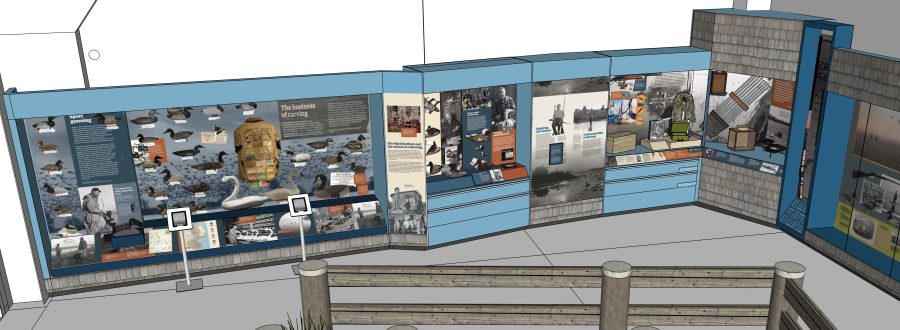
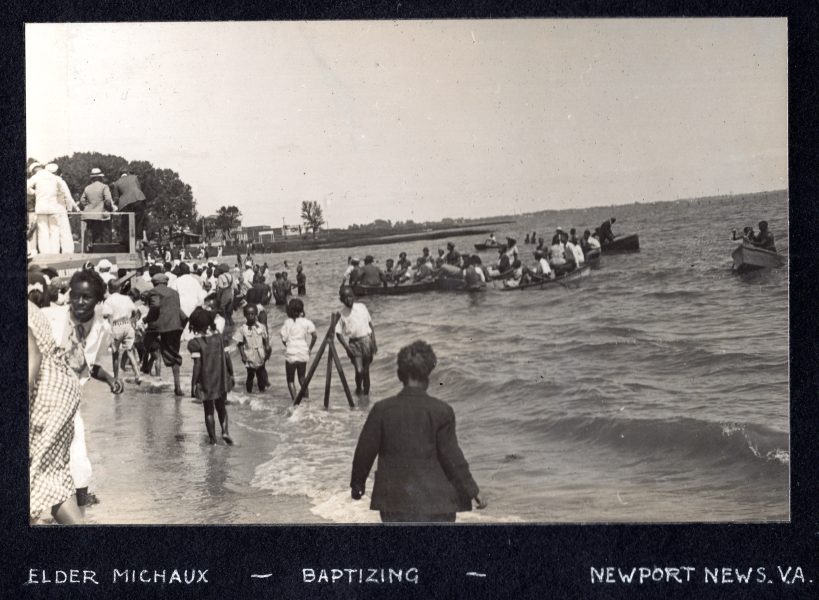
Dive into the heart of the Chesapeake in Stories from the Shoreline, a new long-term exhibition coming to the Chesapeake Bay Maritime Museum. Stories illuminates the perspectives of people and communities about their connection to the unique Chesapeake Bay landscape, a place where water and land intertwine. Drawing from oral histories, manuscripts, and memoirs, the exhibition’s firsthand accounts provide a richer understanding of pastimes and passions like shoreline fishing, waterfowling, muskrat trapping, riverside baptisms, plein air painting, market gunning, eco-tourism, waterfront clubs and gambling, and community conservation. Compelling documentary and historic photographs exhibited along with everyday tools, fine art, and folklife artifacts—including CBMM’s world-class decoy collection—contribute to the rich tapestry of the Chesapeake story through an immersive journey.
Steve and Lem Ward at their shop. Photograph by A. Aubrey Bodine, c. 1966. 747.1
Stories from the Shoreline will open in the spring of 2026 in CBMM’s Welcome Center.
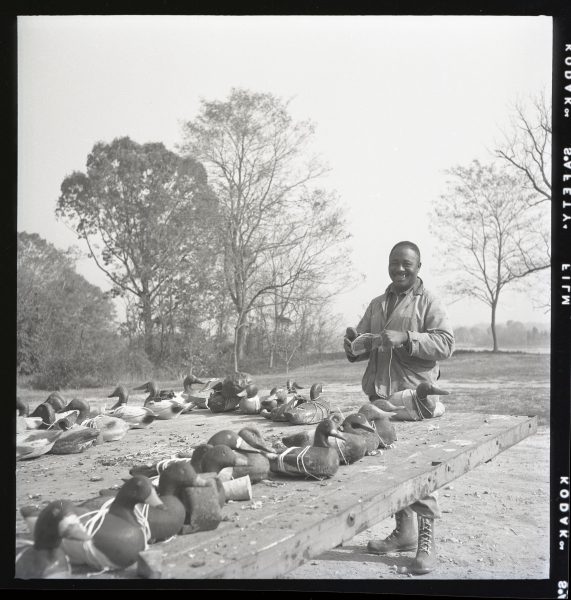
Guide preparing decoys for hunting. Photograph by Constance Stuart Larrabee, 1953, gift of the photographer. 927.748
A rendering of CBMM’s forthcoming Stories from the Shoreline exhibition.
Scott children dip netting Mill Creek near Annapolis, Md. Photograph by Robert de Gast, 1974. 975.298.35
Tundra swan decoy by Samuel T. Barnes or James T. Holly, c. 1890, gift of Mrs. Sifford Pearre. 1969.50.1
Sailing to Freedom: Maritime Dimensions of the Underground Railroad highlights little-known stories and describes the less-understood maritime side of the Underground Railroad, including the impact of African Americans’ paid and unpaid waterfront labor. Self-emancipation along the Underground Railroad was not entirely by overland routes. A great number of enslaved persons made their way to freedom using coastal water routes along the Atlantic seaboard, including the Chesapeake Bay. Enslaved African Americans often escaped by sea aboard merchant and passenger ships, or smaller watercraft. Based upon the book, “Sailing to Freedom,” the exhibition expands the understanding of how freedom was achieved by sea and what the journey looked like for many African Americans.
In Sailing to Freedom, guests will meet figures like Henry “Box” Brown, who escaped to freedom in 1849 by arranging to have himself mailed in a wooden crate to abolitionists in Philadelphia. This summer, teens in CBMM’s Museum Masters camp constructed a recreation of Brown’s crate for the exhibition, basing their design on descriptions from historic manuscripts.
The exhibition’s storytelling is supplemented by artifacts curated from CBMM’s collection and other sources. This includes a log canoe model representing boats used by freedom seekers in the mid-1800s, tools used by enslaved people working in the shipbuilding trade, and a painting of the Baltimore Clipper Young Brutus showing Black mariners on deck.
A portrait of the ship Katherine Jackson, which transported 272 African Americans sold from Maryland and Washington, D.C. to sugar plantations in Louisiana, reveals the dark history of enslavement, while a quilt crafted by members of the National African American Quilt Guild, on loan from the Baltimore-based Universal Sailing Club and commemorating the 10th anniversary of the Souls at Sea remembrance ceremony, depicts 14 ships that transported captive Africans as part of the slave trade.
Sailing to Freedom was curated by New Bedford Whaling Museum Curator of Maritime History Michael Dyer and the University of Massachusetts-Dartmouth’s Timothy Walker, who edited the book that serves as source material. Major funding was provided by the National Endowment for the Humanities through the New Bedford Historical Society, with support from numerous community partners, and is brought to CBMM with assistance from the Portsmouth Museums (Va.).
Sailing to Freedom at CBMM is made possible, in part, with support from Delmarva Public Media, CBMM’s Regional Folklife Center under the Maryland Traditions program of the Maryland State Arts Council, and the generosity of the following supporters: Joan Richtsmeier and Bill Ryan, Beverly and Richard Tilghman, Meta and Bill Boyd, Dock Street Foundation, Dorie and Jeff McGuiness, and Marcia Shapiro and Rabbi Peter Hyman. Viewing this exhibition is included with CBMM general admission, which is always free for CBMM members.
This engraving, titled “Escaping from Norfolk, Virginia in Captain Lee’s skiff,” is featured in CBMM’s upcoming special exhibition Sailing to Freedom. Engraving, 1872 by C.H. Reed, from William Still, The Underground Rail Road.
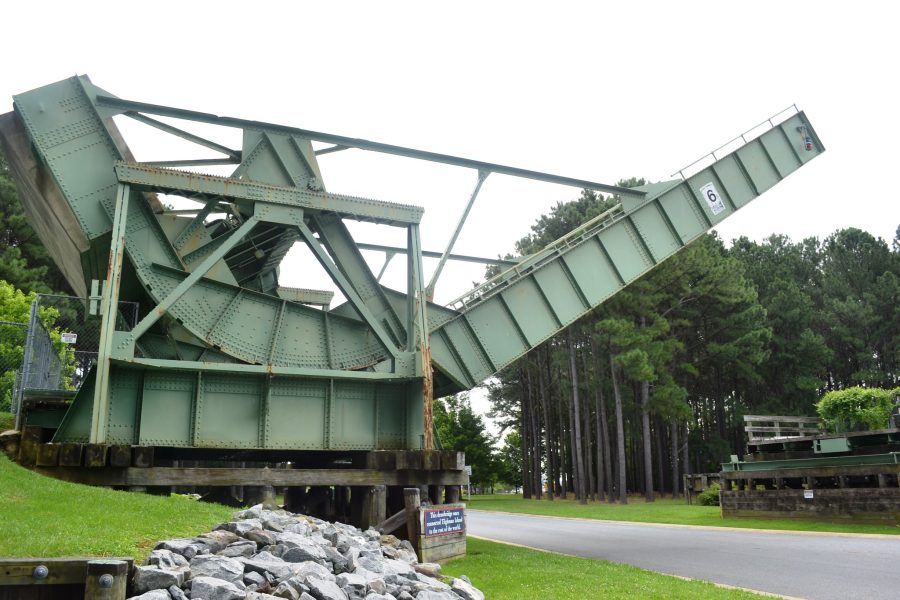
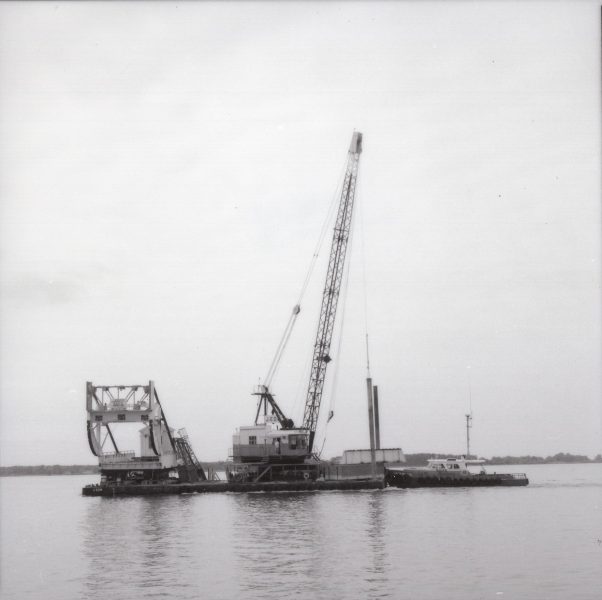
On Oct. 6, 1998, Knapps Narrows Bridge, which connected Tilghman Island to the rest of the world, made its final move when it was sold to CBMM for just $1.
The drawbridge, which had opened an estimated 12,000 times since its construction in 1934, was set to be replaced. CBMM sought to preserve this piece of Talbot County maritime history and had the perfect place for it: the museum entrance.
The bridge was loaded onto a barge, transported 20 miles by water, unloaded at CBMM near the Hooper Strait Lighthouse, and then carefully driven on two tractor trailers to where it still welcomes visitors today.
Activate Windows 10 Pro KMSpico: Download and Use the Activation Tool
Windows 10 Pro KMSpico is a popular activation tool used to activate Windows 10 Pro without purchasing a license. This software helps users unlock all the features of Windows 10 Pro by bypassing the official activation process. Many people look for ways to activate their Windows operating system easily and quickly, and KMSpico offers a solution for that.
To activate Windows 10 Pro KMSpico, you first need to download the tool from a reliable source. After downloading, the activation process is straightforward and user-friendly. The tool works by emulating a Key Management Service (KMS) server on your computer, which tricks Windows into thinking it is activated by a legitimate server. This allows users to enjoy all the benefits of Windows 10 Pro without any restrictions.
Using Windows 10 Pro KMSpico is simple, but it is important to follow the instructions carefully to avoid any errors during activation. Once activated, your Windows 10 Pro will function like a genuine copy, with access to all updates and features. However, users should be aware of the risks involved with using third-party activation tools and consider the legal implications.
How to Download and Install Windows 10 Pro KMSpico for 32-bit and 64-bit Systems
Windows 10 Pro KMSpico is a tool that helps activate Windows 10 Pro on both 32-bit and 64-bit systems. To get started, you need to find the right version for your computer. This guide will explain how to download and install the tool safely and correctly, ensuring KMSpico compatibility with your system.
Windows 10 Pro KMSpico Free Download 64 Bit and 32 Bit Versions
When looking for Windows 10 pro kmspico free download 64 bit or Windows 10 pro kmspico download 32 bit, it’s important to choose the version that matches your system type. Here’s a simple table to help you decide:
System Type
Recommended Download Version
64-bit
Windows 10 pro kmspico free download 64 bit
32-bit
Windows 10 pro kmspico download 32 bit
Make sure to verify your system type before downloading. Using the wrong version can cause installation problems or KMSpico compatibility issues.
Step-by-Step KMSpico Installation and Setup Guide
Installing KMSpico is easy if you follow these steps carefully:
Download the correct KMSpico version for your system (32-bit or 64-bit).
Disable antivirus software temporarily to avoid interference during KMSpico installation.
Run the KMSpico installer as an administrator.
Follow the on-screen instructions to complete the installation.
Restart your computer after installation to apply changes.
Tip: Always check KMSpico compatibility with your Windows version before installation to avoid errors.
How to Use KMSpico to Activate Windows 10 Pro and Microsoft Office
After KMSpico installation, you can activate Windows 10 Pro and Microsoft Office by following these steps:
Open the KMSpico program.
Click the “Activate” button to start the activation process.
Wait for the tool to complete activation.
Restart your computer to finalize the activation.
KMSpico usage is straightforward and usually takes just a few minutes. This process tricks your system into thinking it is connected to a legitimate activation server.
KMSpico Windows 10 Free Download from FileHippo and Uptodown
For those searching for Windows 10 pro kmspico free download, popular platforms like FileHippo and Uptodown often offer versions for both 32-bit and 64-bit systems. These sites provide easy access to:
Windows 10 pro kmspico download 64 bit
Windows 10 pro kmspico download 32 bit
Always ensure you download from trusted sources to avoid corrupted files or malware. After downloading, follow the KMSpico installation guide to activate your Windows 10 Pro smoothly.
Features, Safety, and Compatibility of Windows 10 Pro KMSpico Activation Tool
Windows 10 Pro KMSpico is a type of Windows activation software that helps users activate their Windows operating system without buying a license. This tool comes with several KMSpico features that make activation easy and fast. However, many people also wonder about KMSpico safety and whether it is safe to use on their computers. Another important point is KMSpico compatibility, which means if the tool works well with different versions of Windows and Microsoft Office.
Using KMSpico can offer some KMSpico benefits, such as unlocking full Windows features and updates. But there are also KMSpico security concerns that users should know before deciding to use this activation tool.
Key Features and Benefits of KMSpico for Windows and Office Activation
KMSpico features include:
Activates Windows 10 Pro and other Windows versions without a product key.
Supports activation of Microsoft Office products.
Works offline by emulating a Key Management Service (KMS) server.
Simple and user-friendly interface for easy activation.
Does not require internet connection after installation.
The main KMSpico benefits are:
Benefit
Description
Free Activation
No need to purchase a Windows or Office license.
Full Feature Access
Unlocks all Windows and Office features.
Regular Updates
Can be updated to support new Windows versions.
Quick Activation
Activation process takes only a few minutes.
These features make KMSpico a popular choice for those who want to activate Windows and Office quickly and without cost.
Is KMSpico Safe to Use? Security Concerns and Risks Explained
KMSpico safety is a topic many users ask about. While the tool is designed to activate Windows and Office, there are KMSpico security concerns to consider:
Some antivirus programs may flag KMSpico as malware because it modifies system files.
Using KMSpico may violate Microsoft’s terms of service.
There is a risk of downloading fake or harmful versions from untrusted sources.
The tool may not receive official support or updates from Microsoft.
Important: Always scan the KMSpico file with antivirus software before installation and use it carefully. Understanding these risks helps users make informed decisions about using this Windows activation software.
KMSpico Compatibility with Windows 10 Pro, Windows 11, and Office Suite
KMSpico compatibility is generally good with many Microsoft products. It supports:
Windows 10 Pro and other editions of Windows 10.
Windows 11 activation.
Various versions of Microsoft Office, including Office 2010, 2013, 2016, 2019, and Office 365.
However, compatibility may vary depending on the KMSpico version and the specific Windows or Office update installed. Users should check if their system matches the KMSpico requirements before using the tool.
Software Version
KMSpico Compatibility Status
Windows 10 Pro
Fully compatible
Windows 11
Compatible with latest KMSpico
Microsoft Office 2016+
Supported
Older Windows versions
May have limited compatibility
Ensuring KMSpico compatibility helps avoid activation errors and system issues.
KMSpico Updates, Troubleshooting, and Support Options
KMSpico updates are important to keep the tool working with new Windows and Office versions. Regular updates fix bugs and improve KMSpico features.
If users face problems, common troubleshooting steps include:
Reinstalling KMSpico with administrator rights.
Temporarily disabling antivirus software during installation.
Checking system compatibility before activation.
Running the activation tool again if it fails the first time.
Since KMSpico is unofficial Windows activation software, it does not have formal support channels. Users often rely on online forums and communities for help.
Note: Always download the latest KMSpico version from trusted sources to reduce risks and improve performance.
FAQ: Common Questions About Windows 10 Pro KMSpico Activation
Many people have questions about using KMSpico as a Windows activation software. Here, we answer some common queries about KMSpico usage, KMSpico legality, and what KMSpico reviews say. Understanding these points can help you decide if this tool is right for you.
KMSpico is known for its ability to activate Windows 10 Pro without a product key. It works by emulating a Key Management Service (KMS) server, which tricks Windows into thinking it is properly licensed. This method is popular because it is fast and easy to use.
However, KMSpico legality is a concern for many users. Since it bypasses official Microsoft activation, it may violate Microsoft’s terms of service. This means using KMSpico could be considered illegal in some regions. Always check your local laws before using such tools.
KMSpico reviews often mention that while the tool is effective, it may trigger antivirus warnings. This happens because KMSpico modifies system files, which some security programs see as suspicious. Users should be cautious and ensure they download KMSpico from trusted sources to avoid malware.
KMSpico support is limited because it is not an official Microsoft product. Users usually rely on online communities and forums for help if they encounter issues. There is no formal customer service available.
Can KMSpico Activate Windows 11?
Yes, KMSpico usage extends to Windows 11 activation as well. The tool is designed to work with various Windows versions, including Windows 11, by emulating the KMS server for activation.
Windows Version
KMSpico Activation Status
Windows 10 Pro
Fully supported
Windows 11
Supported with latest KMSpico
Keep in mind that KMSpico legality remains the same for Windows 11 as for Windows 10 Pro. Using it may violate Microsoft’s licensing terms. Also, KMSpico support for Windows 11 depends on the version of the tool you use.
How to Activate Windows Without a Product Key Using KMSpico
Activating Windows without a product key using KMSpico is simple. Follow these steps for safe KMSpico usage:
Download the latest KMSpico version from a trusted source.
Temporarily disable your antivirus software to prevent interference.
Run KMSpico as an administrator.
Click the “Activate” button within the program.
Wait for the activation process to complete.
Restart your computer to apply changes.
Note: This Windows activation software works by simulating a KMS server, so your system believes it is legitimately activated.
Always be aware of KMSpico legality in your area before proceeding. Improper use can lead to legal issues or system instability.
What Are the Legal and Safety Implications of Using KMSpico?
Using KMSpico raises important questions about legality and safety. Here are some key points:
Legality: KMSpico bypasses Microsoft’s official activation process, which may be illegal depending on your country’s laws.
Safety: Some antivirus programs flag KMSpico as malware because it changes system files.
Risks: Downloading KMSpico from untrusted sources can expose your computer to viruses or harmful software.
Support: Since KMSpico is unofficial, there is no formal KMSpico support or warranty.
Important: Always weigh the risks and legal implications before using this Windows activation software.
Are There Any Reliable KMSpico Alternatives for Windows Activation?
If you are looking for other options besides KMSpico, here are some alternatives:
Microsoft Genuine Activation: Purchasing a valid license key from Microsoft or authorized sellers.
Digital License Activation: Using a digital license linked to your Microsoft account.
Other KMS Tools: Some other KMS-based tools exist, but they share similar legality and safety concerns as KMSpico.
Alternative Method
Pros
Cons
Official Microsoft License
Legal and safe
Requires payment
Digital License Activation
Easy and official
Needs prior purchase
Other KMS Tools
Similar functionality
Same legal and safety risks
Choosing a legal and safe activation method is always recommended. KMSpico support is limited, so official options provide better reliability and peace of mind.
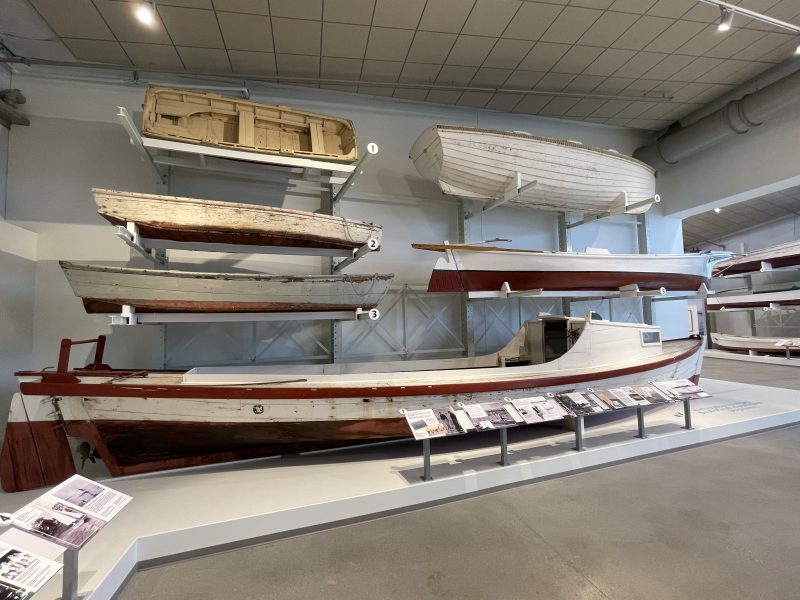
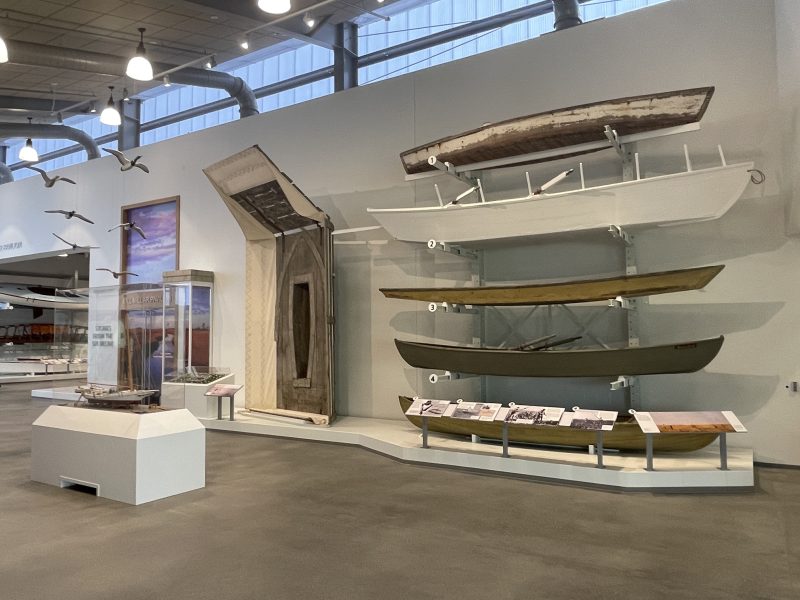
Nearly 30 boats from CBMM’s small craft collection—many of them on display for the first time ever—are highlighted in Water Lines: Chesapeake Watercraft Traditions, a long-term exhibition that opened within the new Welcome Center in the fall of 2023. The stories of the people who sailed, raced, used, designed, and built boats are at the center of this new look at familiar watercraft. Beginning with an overview of signature Chesapeake Bay vessels in miniature in the Model Gallery and an exploration of the skipjack as an icon of the region’s maritime industry and culture, Water Lines connects the “lines” of each vessel’s design and construction to human narratives of everyday work and play.
The stories are both familiar and surprising: from one-design sailboats on which young people learned to sail and which brought generations of sailors together for regattas, to traditional craft that served watermen, waterfowlers, and families alike, to mass-produced craft that enabled more universal access to the water. Images from CBMM’s rich photographic collection, along with carefully chosen artifacts and models, give dimension to the role that utilitarian objects such as boats play in Chesapeake life.
Junior sailors learning on a LJ scow. Photograph by R. Howe Lagarde, 1940, gift of the photographer. 1396.265
Jack Nelson driving a powerboat while another man skis. Photograph c. 1955, gift of Jack Nelson. 1459.6
Bushwhack boat built by Jim Holly used for hunting in icy waters. Photograph, c. 1970, gift of E.B. Griffin. 756.7
Work boats like Alverta, Pilot’s Gig, & Glide on display in Water Lines. Photograph by A.J. Daverede.
Waterfowling vessels on display in Water Lines. Photograph by A.J. Daverede.
Guests entering CBMM’s Welcome Center are greeted by four walls that will orient them to their CBMM experience and introduce them to the interpretive themes they will discover throughout campus during their visit. The overarching concept is that the essence of the Chesapeake Bay story is how people have connected to place over time. It is the story of how this unique environment—where land is intricately intertwined with water—has impacted individual lives and communities throughout history.
Through select objects and images, the orientation exhibition gives guests a taste of how the exhibitions and artifacts preserved at CBMM tell the stories of how people have interacted with the Chesapeake Bay, a source of bounty and income, a place of work and recreation, where traditional culture is valued, but change has been ever-present.
Skipjack Rosie Parks. Photograph by Tracey Johns, 2016. Collection of the Chesapeake Bay Maritime Museum.
Tangier Island, Virginia. Photograph by David W. Harp, 2007. Courtesy of the photographer.
A third-order Fresnel lens greets guests to the new Welcome Center as part of the orientation exhibition.
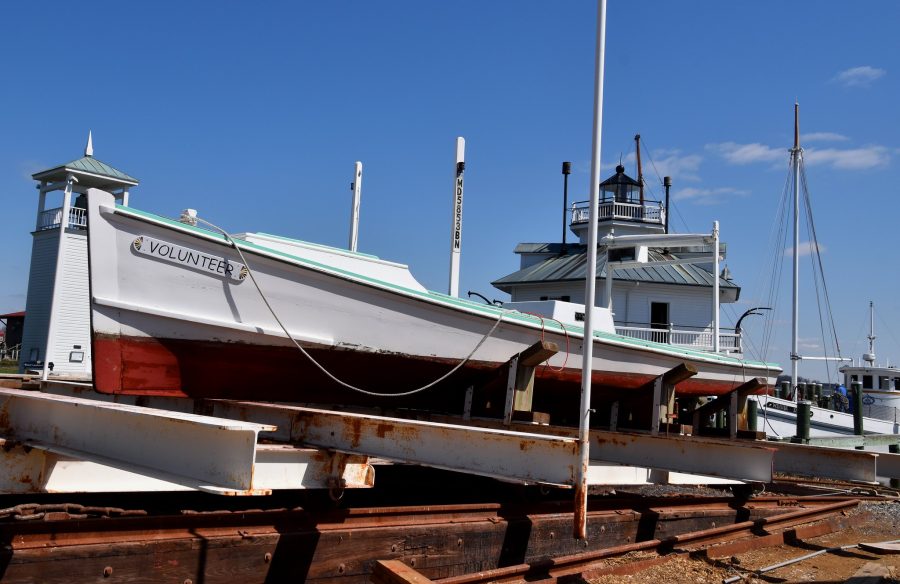
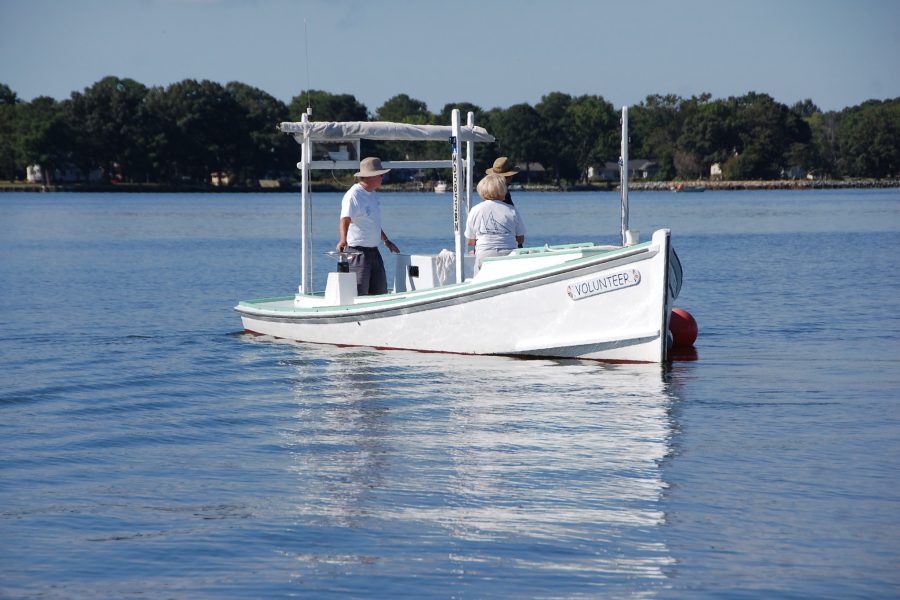
Volunteer is a replica of Leon Marsh’s 1990 Smith Island box-stern crab scrape Darlene, as documented in Paula J. Johnson’s book “The Workboats of Smith Island.” In the shallow waters around Smith Island, watermen harvest crabs in this type of workboat. Dragging a special dredge called a crab scrape behind the boat, they rake up peeler crabs hiding on the bottom. The boats have a low draft, allowing them to get around in shallow water, where blue crabs hide in eelgrass to shed their shells. The low sides on the boat make it easier to pull the crab scrape up over the side.
Built in 2002 by CBMM boat shop volunteers and staff under the supervision of Tom Howell, the boat was intended for on-water use by CBMM.
Built: 2002, St. Michaels, Md., by CBMM Shipyard volunteers and staff Length: 29 ft., 4 in. (8.96 m) Beam: 10 ft., 3 in. (3.14 m) Draft: 1 ft., 8 in. (0.55 m)
Volunteer, Smith Island Crab Scraping Boat Replica, 2006. Collection of the Chesapeake Bay Maritime Museum, St. Michaels, Md.
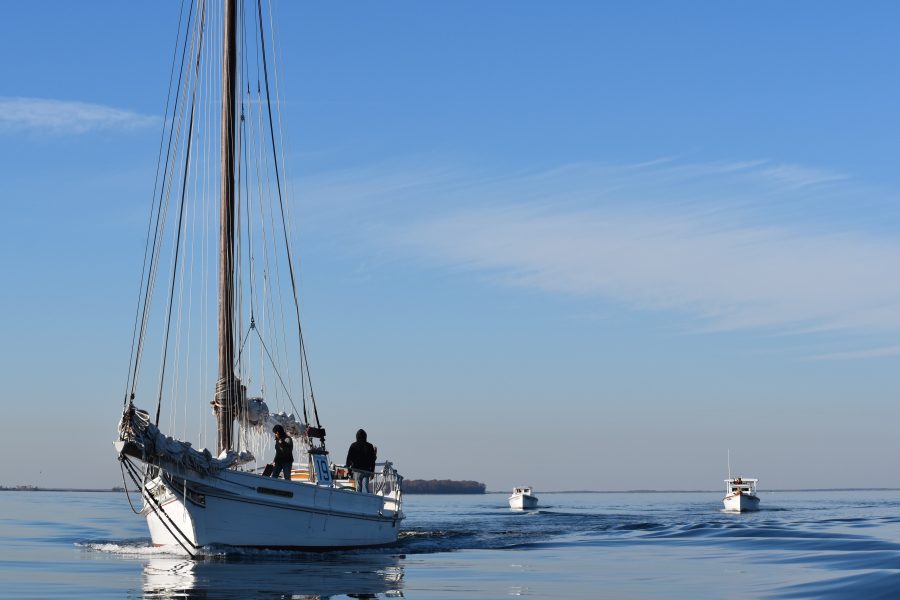
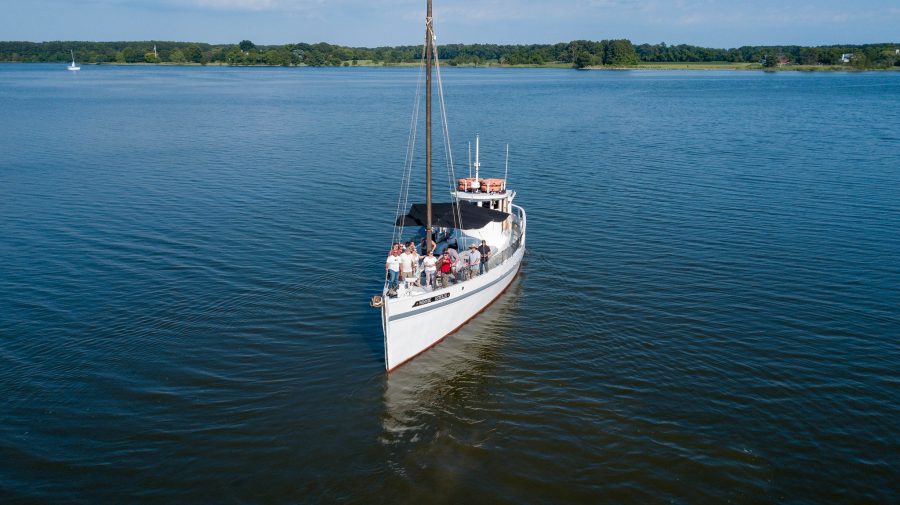
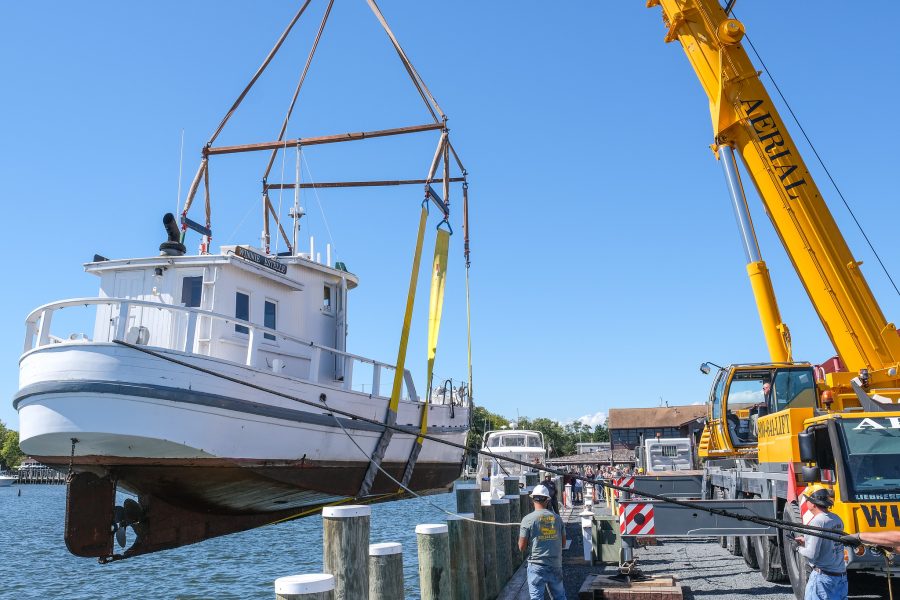
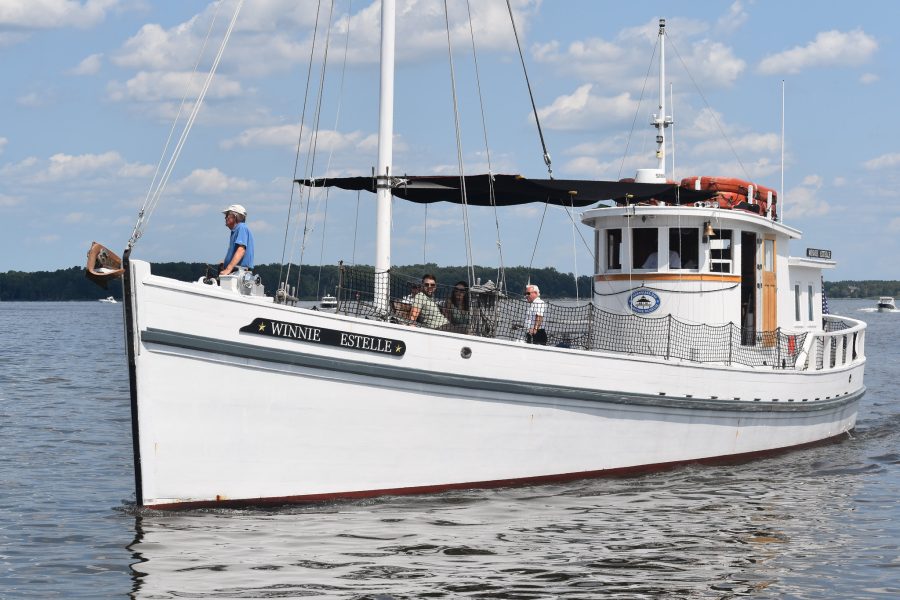
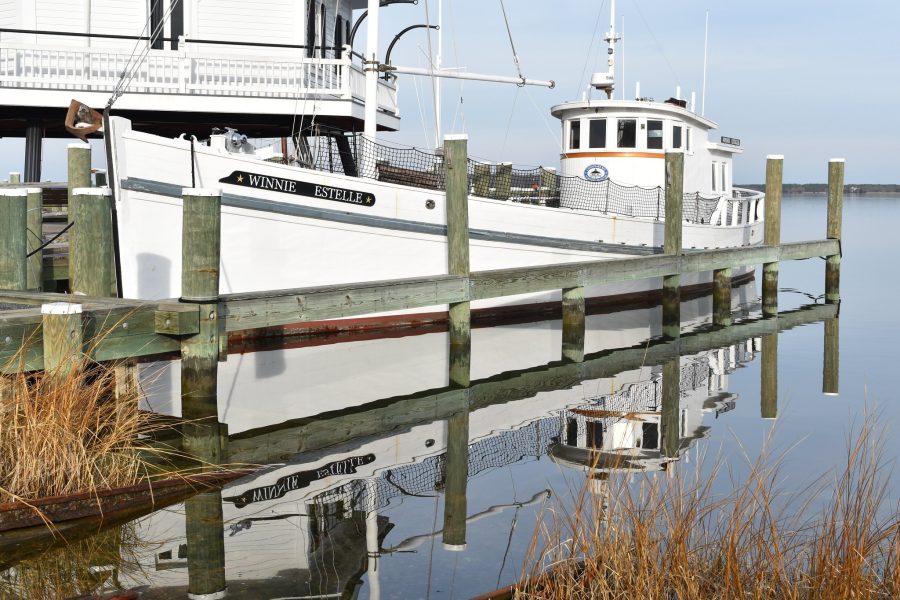
Winnie Estelle was built in Crisfield, Md., by Noah T. Evans in 1920 and operated on the lower Chesapeake Bay for more than 50 years, carrying fish and oysters purchased directly from watermen and taking them to city markets or to big seafood packing houses for sale. A native Smith Islander and occasional boatbuilder, Evans named Winnie Estelle for his two daughters.
Winnie Estelle’s last Chesapeake owners were Smith Islanders Watson Marie Marshall, known as “Shug,” and his son Eugene “Gene” Marshall. They bought Winnie Estelle in 1960 and frequently took the vessel across the Bay to pick up fish scraps for rendering, to sell oysters, or to travel to the waterfront fish market in Washington, DC. When sold by the Marshalls 1975, Winnie was taken to the Caribbean as a cargo boat and, year later, was rebuilt for use as an island trader, carrying lumber from Honduras to Belize, and later as a charter boat in Belize.
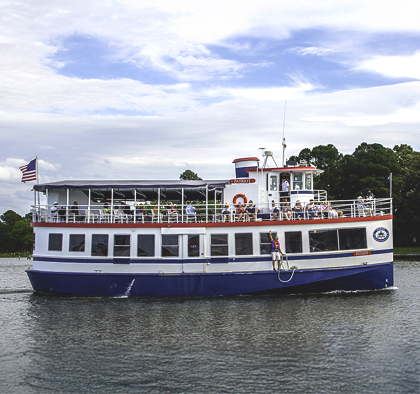
Today, Winnie takes students out for educational programming, and CBMM guests and private parties out for Miles River cruises. In early 2012, Michael Whitehill of Centreville, Md., purchased the boat, which was donated to CBMM in 2014 by an anonymous donor.
Built: 1920, Crisfield or Smith Island, Md., by Noah Evans Length: 64 ft., 9 in. (19.78 m) Beam: 16 ft., 3 in. (4.97 m) Draft: 3 ft., 6 in. (1.09 m)
Winnie Estelle, buyboat, 1920. Collection of the Chesapeake Bay Maritime Museum, St. Michaels, Md. Gift of an anonymous donor. 2014.0014.0001.
Winnie Estelle after refurbishment, Belize c. 1980s. 1349.0003